Quick Answer
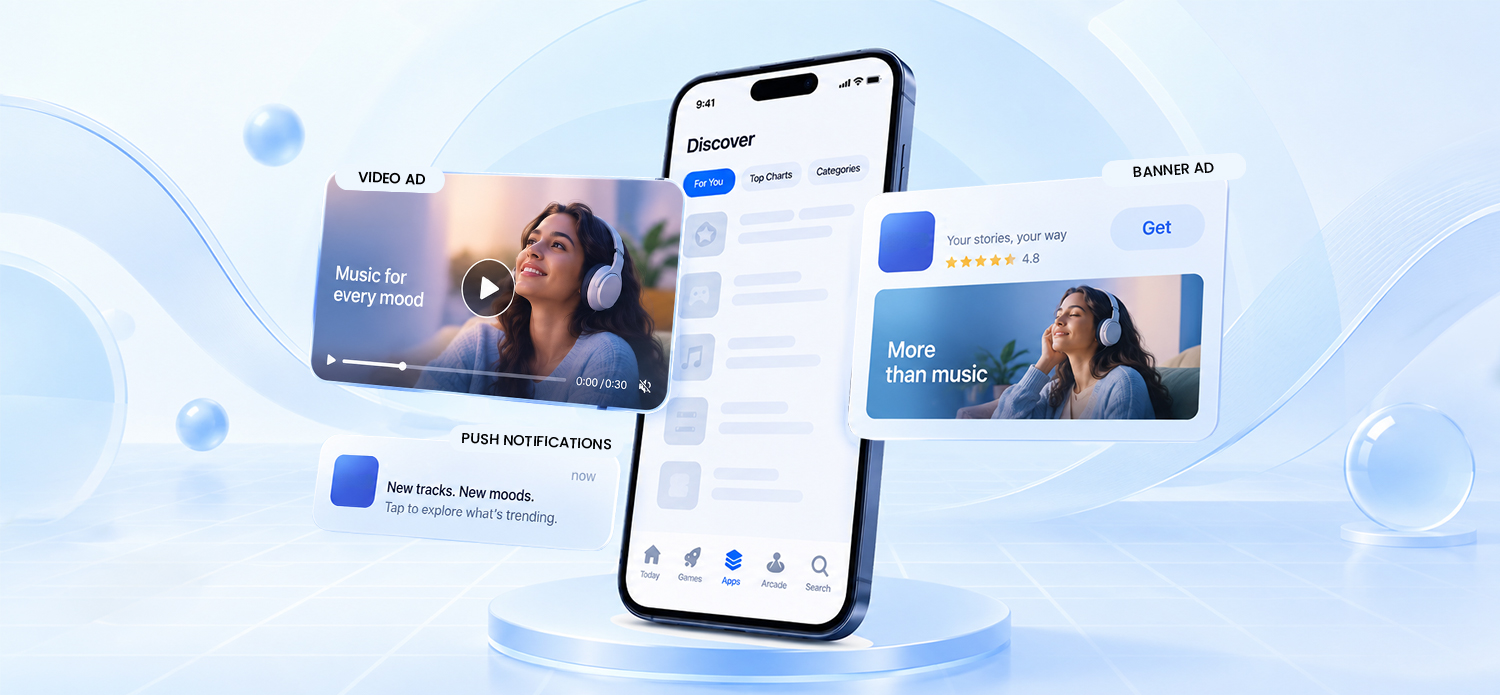
In-app ad formats include native ads, video ads, banner ads, carousel ads, interstitials, rewarded video, and push notifications. Each format can support different campaign objectives: video and interstitials can help capture attention, native and carousel formats can support discovery and consideration, while banners and push notifications can be useful for direct response and re-engagement. There is no single format that converts best across every campaign; performance depends on the audience, app category, creative, placement, and campaign objective.
Introduction
Selecting the right in-app ad format is often the difference between high user engagement and wasted ad spend. And the opportunity continues to grow as mobile advertising becomes a larger part of the digital ecosystem. The global in-app advertising market is projected to reach USD 418.73 Billion in 2026 and USD 614.74 Billion by 2031, growing at a 7.99% CAGR. With more advertisers competing for attention inside apps, choosing the right format is no longer simply a creative decision. It is a performance decision: which format can deliver the right message, to the right audience, at the right point in the user journey?
How to Match Ad Format to Campaign Objective
To maximize ROI, ad placements must align with user intent and funnel stages. Broadly mapping ad formats to your primary marketing objectives ensures higher conversion efficiency:

Awareness: Video and Interstitial Ads
- In-App Video Ads: Highly visual and immersive, video can capture attention quickly and communicate an app, product, or offer within a short interaction.
- Interstitial Ads: Full-screen ads that typically appear at natural transition points within an app, such as between levels or screens. Their prominent placement can help capture attention, but frequency and timing should be managed carefully to avoid disrupting the user experience.
Consideration: Native and Carousel Formats
- Native Ads: Designed to match the look, feel, and function of the host app environment. Native ads integrate directly into content feeds, minimizing ad fatigue and driving higher engagement during the user evaluation stage.
- Carousel Ads: Allow users to swipe through multiple images or cards within a single ad unit. Carousel ads can be useful for e-commerce campaigns, product showcases, and campaigns with multiple value propositions.
Conversion: Banner and Push Formats
- Banner Ads: Banners provide consistent visibility and can generate large volumes of impressions, making them useful when reach and cost efficiency are priorities. They perform best for retargeting or simple direct-response messaging.
- Push Notifications: Unlike conventional in-app ad formats, push notifications are messages sent by an app to users on their devices. They are primarily used for re-engagement, promotions, reminders, and retention rather than acquiring new users through third-party app inventory.
What Industry Research Says About In-App Ad Formats
When comparing conversion potential across formats, native and video formats lead in engagement, whereas traditional banners provide lower cost per impression:

Source* fortune, IMARC, Mordor Intelligence
Case Studies – In-App Advertising
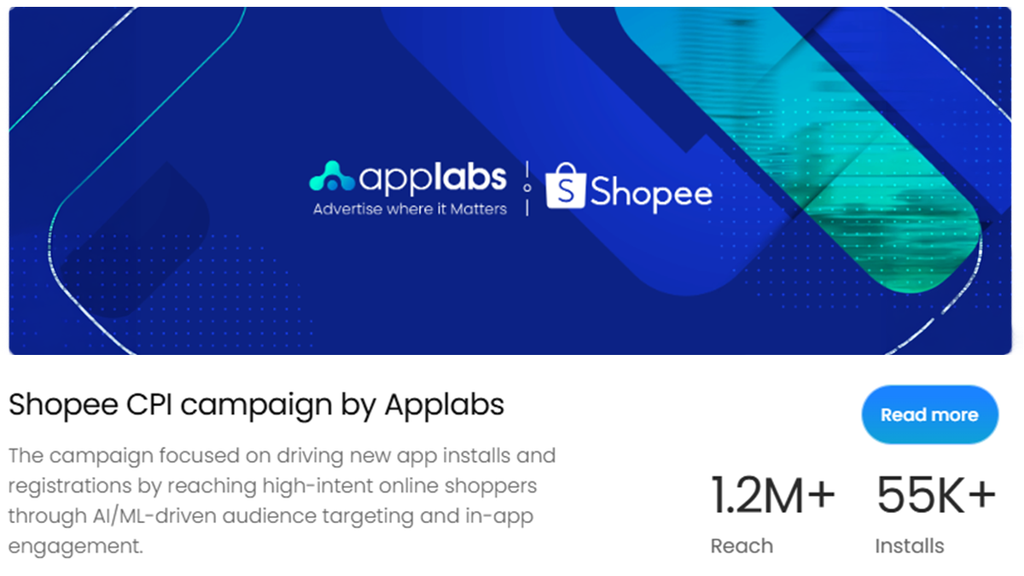
Shopee CPI Campaign by AppLabs
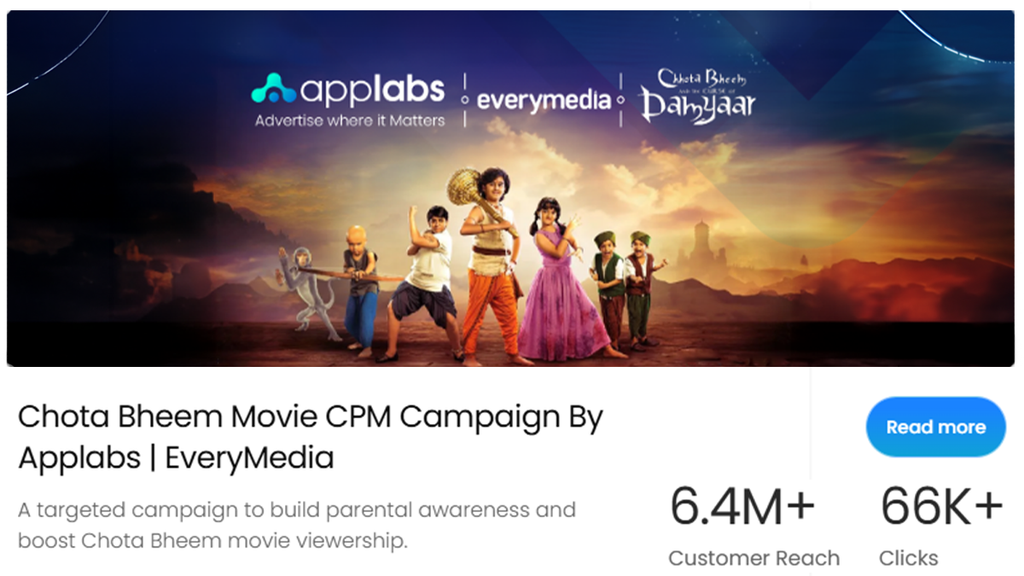
Chota Bheem Movie CPM Campaign By Applabs
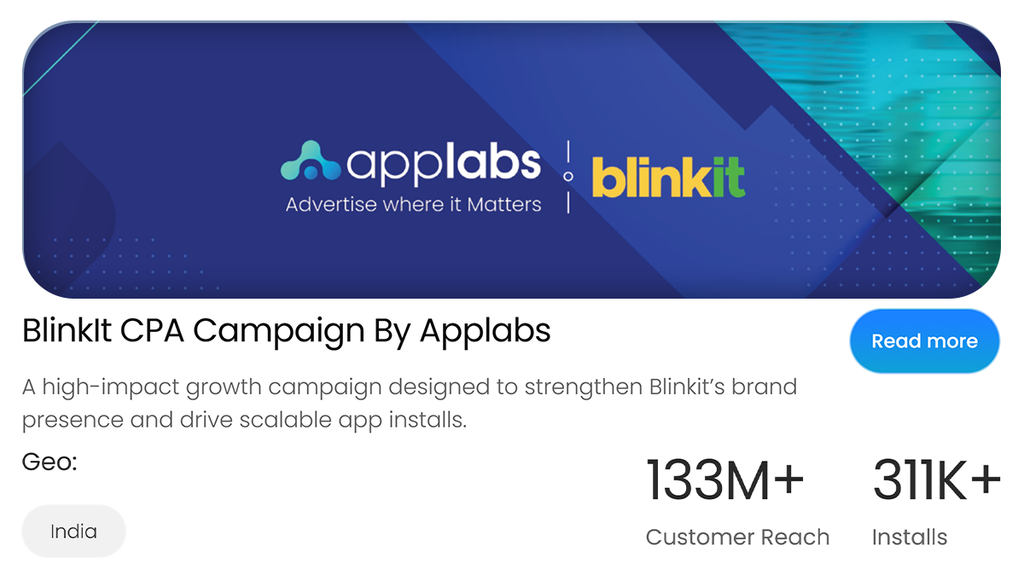
BlinkIt CPA Campaign By Applabs
FAQs
Which in-app ad format has the highest conversion rate for mobile app campaigns?
There is no single in-app ad format with the highest conversion rate across every campaign. Rewarded video and native ads often perform strongly, but results depend on the audience, creative, placement, and campaign objective.
What are the best in-app ad formats for increasing app installs?
Video, rewarded video, interstitial, and native ads can be effective for driving app installs. Video formats can communicate an app’s value quickly, while native placements integrate naturally into the app experience. The strongest format should ultimately be evaluated against install rate, post-install quality, and cost per acquisition.
How should advertisers choose the right in-app ad format for their campaign objective?
Match the format to the objective: video for awareness, native and carousel for consideration, and banners or push for retargeting. Creative, audience intent, placement, and performance data should guide the final format mix.
What is the difference between rewarded video and interstitial ads?
Rewarded video ads are opt-in video experiences where users receive an in-app benefit for completing the ad. Interstitial ads are full-screen ads that typically appear at natural transition points within an app.
How can advertisers improve conversions from in-app ads?
Advertisers can improve conversions by matching the ad format to the campaign objective. Use the right format, relevant creative, precise targeting, strong placements, and continuous testing and optimization on meaningful outcomes such as installs, purchases, and re-engagement.
Choose the Right In-App Ad Mix With Applabs
Different campaign objectives call for different combinations of formats, audiences, inventory, and creative. Applabs helps advertisers activate in-app campaigns across formats such as video, native, banner, and carousel, with campaign measurement and optimization aligned to outcomes such as installs, engagement, and re-engagement.
Explore the App Discovery Platform to discover how Applabs combines in-app and OEM inventory to support mobile app growth.