Quick Answer
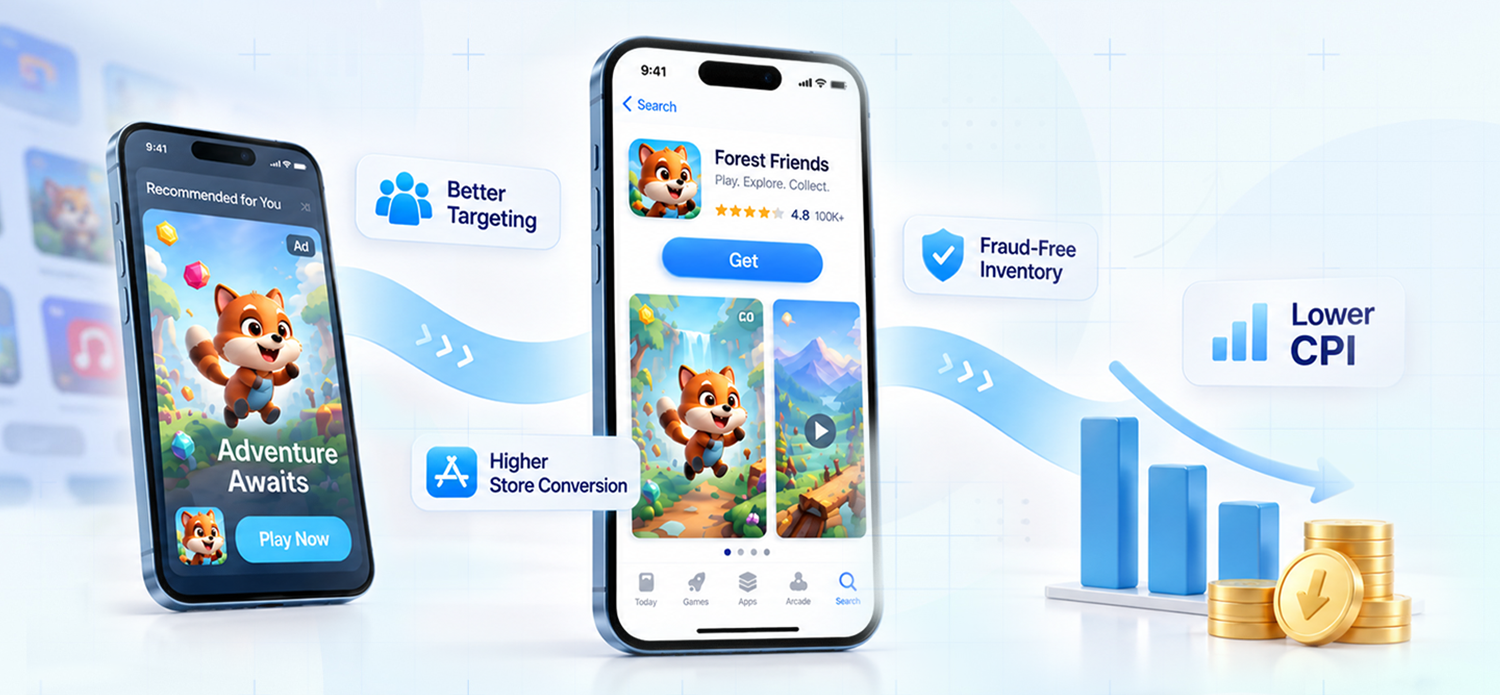
Reducing Cost Per Install (CPI) starts with improving the quality of traffic rather than simply lowering bids. App marketers can reduce CPI by refining audience targeting, improving app store conversion rates, removing low-quality or fraudulent inventory, and shifting spend toward channels and placements that consistently deliver installs. Combining these with ongoing budget optimization and performance-based creative testing can help lower acquisition costs while maintaining scale and user quality.
Introduction
In mobile performance marketing, rising Cost Per Install (CPI) can quickly erode margins and limit efficient scale. The pressure on acquisition costs is growing as more advertisers compete for limited user attention: global app user-acquisition spend reached $78 billion in 2025, up 13% YoY. The report points to continued pressure on user acquisition as competition intensifies and more brands compete for the same audiences.
The pressure is particularly visible in mobile gaming, where paid install share increased 10% year over year while ad impressions grew 20% in 2025, indicating that advertisers are putting more ads into an increasingly competitive acquisition environment.
For app marketers, reducing CPI therefore requires more than simply lowering bids. The focus should be on improving the efficiency of the entire acquisition funnel from audience targeting and inventory quality to creative performance, app-store conversion, fraud prevention, and budget allocation. The goal is not just to acquire installs at a lower price, but to acquire higher-quality users at a sustainable cost.
What Drives CPI Up (Inventory Quality, Targeting, Fraud)
Understanding why acquisition costs spike is the first step toward optimization. Three primary factors typically drive up effective CPI:
- Poor Inventory Quality: Running ads on low-quality or poorly vetted inventory can generate low-intent clicks, weak click-to-install rates, and poor post-install quality.
- Overlapping Targeting: Running campaigns with heavily overlapping audiences can create inefficient competition for the same users or inventory.
- Ad Fraud and Bot Traffic: Click flooding, install hijacking, and fake SDK impressions consume ad budgets without delivering real users.

Audience and Targeting Fixes That Lower CPI
- Build Lookalike Audiences: Use high-value users or cohorts with strong post-install outcomes as seed audiences rather than relying only on broad demographic targeting.
- Optimize App Store Pages (ASO): A low conversion rate on your store product page inflates effective CPI even if ad creative CTR is high. Continually test screenshots, preview videos, and localized metadata.
CPI = Media Spend ÷ Attributed Installs
Improving the percentage of users who install after clicking an ad can lower CPI without necessarily reducing media spend.
- Implement Exclusion Lists: Exclude existing active users from user acquisition campaigns to eliminate wasted impressions and attribution overlap.
Inventory Choices That Affect CPI: OEM vs In-App vs Web
OEM/on-device inventory can provide an additional acquisition channel with device-level discovery opportunities. Its effectiveness should be evaluated alongside CPI, install rate, and post-install quality.

To dive deeper into matching specific ad formats to your goals, check out our breakdown on in-app ad format performance.
How Automated Optimization Can Reduce Wasted Spend
Automated optimization can help marketers react to performance changes faster by adjusting bids, reallocating budget, and identifying higher-value traffic patterns. Depending on the platform, optimization models may use signals such as conversion rates, post-install behavior, and predicted user value.
- Real-Time Bid Adjustments: Automatically lowering bids on low-converting sub-publishers and reallocating spend to high-performing placements.
- Predictive Value Scoring: Identifying early post-install signals to optimize campaigns toward users who yield higher long-term value, preventing over-spending on low-retention cohorts.
- Creative-to-Install Optimization: A high CTR does not necessarily mean an efficient CPI. If users click an ad but do not install, media costs accumulate without improving acquisition efficiency. Test creative concepts, messaging, formats, CTAs, and app-store alignment to improve the percentage of clicks that result in installs.
Optimize for Quality, Not Just the Lowest CPI
A lower CPI is not always a better outcome. If cheaper inventory produces users who uninstall quickly or generate little revenue, reducing CPI can hurt overall campaign efficiency. Where data is available, evaluate CPI alongside retention, ROAS, LTV, or other post-install outcomes.
FAQs
1. How to reduce CPI on Android apps without losing install volume?
Focus on quality-based optimization instead of blanket bid cuts. Use high-value user cohorts for audience modeling, exclude low-performing inventory where appropriate, and test OEM/on-device placements alongside in-app and other acquisition channels. Evaluate each source against CPI, install rate, and post-install quality rather than assuming one channel will always be cheaper.
2. Why is my CPI increasing even though my ad spend hasn’t changed?
Rising CPI with flat spend usually points to declining traffic quality,more clicks are landing on low-intent or fraudulent inventory, or your targeting has started overlapping with existing users. Auditing publisher-level performance and checking for abnormal Click-to-Install Time (CTIT) patterns is the fastest way to isolate the cause.
3. What factors affect CPI for gaming apps in emerging markets?
Benchmarks vary by OS, category, and region, but gaming apps generally carry higher baseline CPIs than utility or casual apps due to competitive bidding. In emerging markets, mobile web and OEM placements often bring costs down relative to global averages, though conversion intent should be checked alongside price.
4. How does ad fraud affect Cost Per Install calculations?
Fraudulent traffic (click flooding, install hijacking, fake SDK impressions) inflates spend without producing real users, which drives up effective CPI even if your reported bid stays constant. Watching for low post-install retention and unfamiliar publisher IDs helps flag this early.
5. Can improving App Store Optimization (ASO) lower CPI without increasing ad spend?
Yes, since CPI is a function of both ad cost and click-to-install conversion, improving store page elements (screenshots, preview videos, localized metadata) raises the install rate from the same traffic, effectively lowering CPI without touching the media budget..
Optimize App Acquisition With Applabs
Reducing CPI requires more than bid adjustments. Applabs helps advertisers run and optimize app acquisition campaigns across in-app and OEM environments, with campaign performance evaluated across targeting, inventory, creative, and post-install outcomes.
Explore the App Discovery Platform to see how Applabs supports app acquisition across OEM and in-app inventory.