Quick Answer
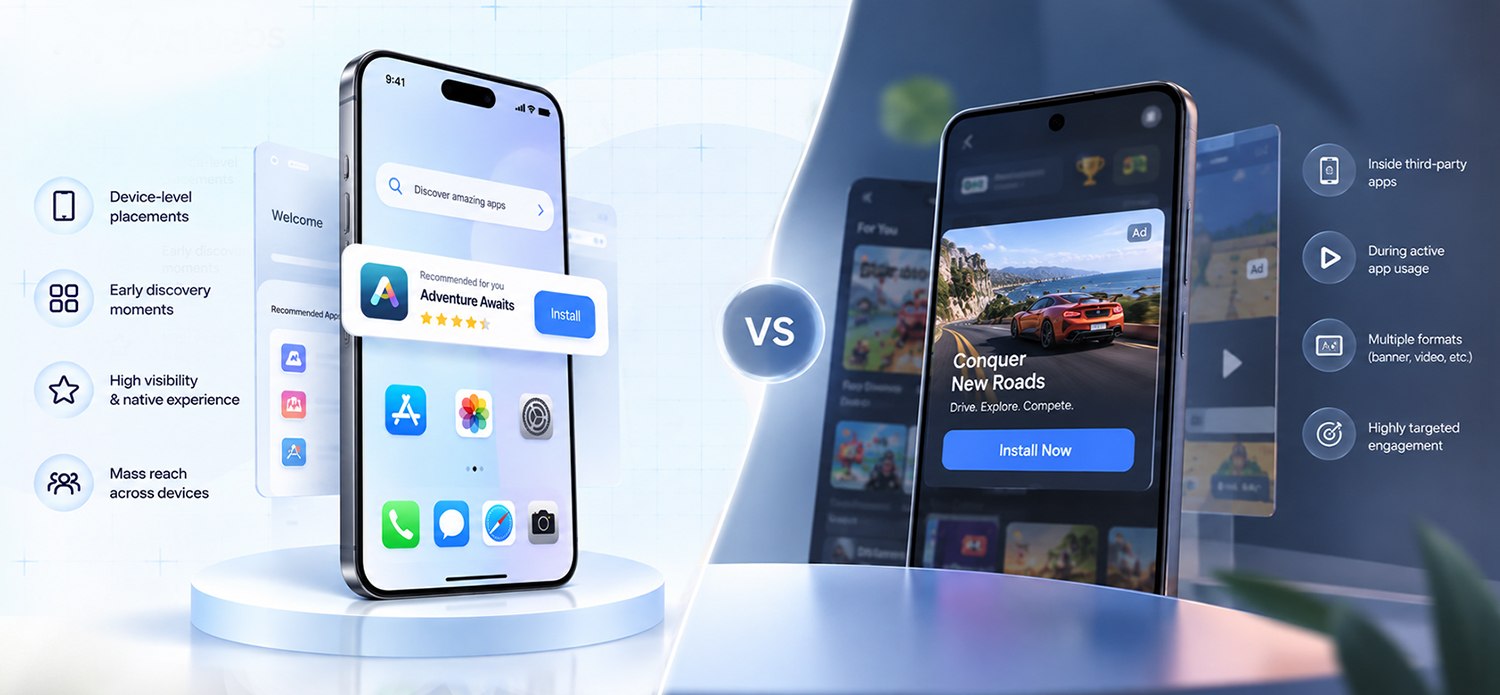
OEM advertising reaches users through device-level environments such as setup flows, system folders, app stores, and home-screen placements, while in-app advertising reaches users inside third-party apps through formats such as banners, interstitials, native ads, and rewarded video.
The key difference is where and when users encounter the ad: OEM inventory captures attention at the device and discovery level, while in-app inventory engages users during active app usage. For many app marketers, combining both creates broader reach across the user journey, from early discovery to active engagement.
Introduction
Mobile user acquisition is no longer about choosing one place to reach users. It is about understanding where users encounter an app and what they are doing when that encounter happens. This is where the difference between OEM advertising vs. in-app advertising becomes important.
OEM advertising reaches users through device-level environments, such as setup experiences, recommendation surfaces, OEM app stores, and other native placements. In-app advertising, meanwhile, reaches users while they are already engaged with another application. Both can generate app installs, but they solve different acquisition problems. OEM brings discovery closer to the device. In-app advertising brings acquisition into an active app experience. Understanding that difference can help marketers decide where each channel fits within their user acquisition strategy.

OEM Advertising: Discovery at the Device Level
Unlike conventional app advertising, OEM distribution can place apps within the device ecosystem itself. Android’s device ecosystem allows manufacturers to pre-install their own apps as well as apps from third-party publishers, creating opportunities for app discovery before a user actively searches an app store. Depending on the OEM and campaign setup, these can include:
- Device setup experiences
- OEM app stores
- App recommendation surfaces
- Device-level app folders
- Home-screen or launcher placements
- Pre-install or dynamic preload opportunities
- Other native device discovery environments
This moves app discovery closer to the device itself. A user does not necessarily have to open Google Play or the App Store and search for an app first. The recommendation can appear as part of the device experience. That creates a different type of discovery where app store search captures an existing need while device-level discovery can introduce a solution before the user actively searches for it.

In-App Advertising: Reaching Users During Active Engagement
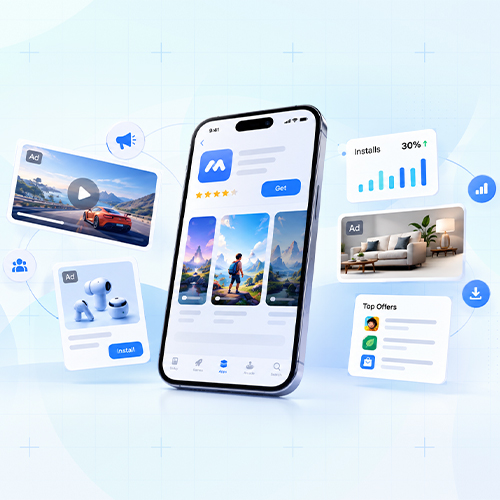
In-app advertising operates within third-party mobile apps and some common formats include:
- Native ads
- Banner ads
- Interstitials
- Rewarded video
- Playable ads
- Video placements
The scale of in-app engagement is significant: consumers spent 5.3 trillion hours in mobile apps globally last year. The user’s attention is already focused on an app, whether they are playing a game, reading an article, watching content, or completing another activity. This creates a different acquisition environment from OEM advertising. Depending on the platform, inventory and available signals, in-app campaigns can use contextual, device, audience, or behavioral signals to reach specific user segments. For example, a gaming app can introduce another game to an audience already engaged with mobile gaming.
Quick Comparison: OEM vs. In-App Advertising
Evaluating oem ads vs in-app ads requires looking at where ad placements appear, how users discover your app, and what intent levels drive conversions.

When OEM Inventory May Be the Better Fit
OEM inventory gives app marketers direct access to device hardware and system-level real estate. It provides distinct advantages when looking for the best ad inventory for app installs:
- Uncontested Pre-Install & Setup: Dynamic updates and setup wizards allow your app to be recommended the moment a user turns on a brand-new phone, capturing users before they ever open traditional app stores.
- Higher CVR: Native system placements (such as recommended folders or system search bars) match the device UI perfectly. Users perceive these ads as trusted system utilities rather than disruptive marketing.
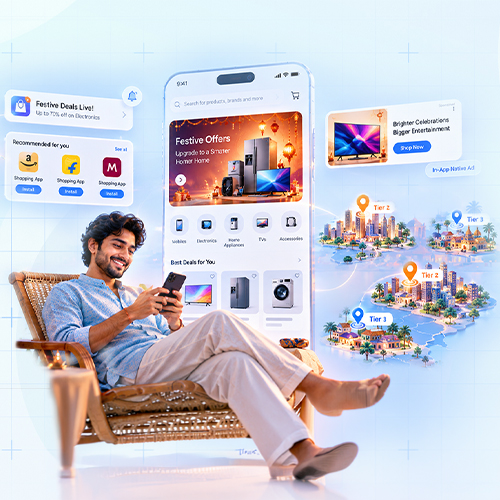
- Reach New Markets: OEMs dominate key Android-first regions across Asia, Latin America, and Europe. Reaching users directly via OS-level placements secures immediate local market share.
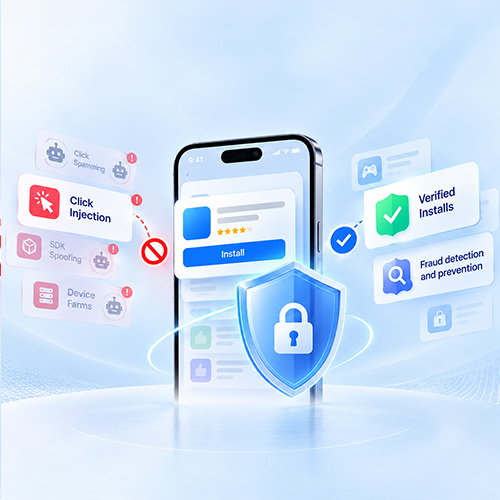
- Brand Safe Environments: Because OEM inventory comes directly through device firmware and verified networks, it is less exposed to click injection and attribution fraud than traditional open exchanges.
When In-App Inventory May Be the Better Fit
In-app advertising delivers ads inside third-party apps using programmatic ad networks and SDK integrations. Its inventory remains essential for specific campaign goals:
- Granular In-App Behavioral Targeting: In-app networks leverage rich historical usage data, making it easier to target users based on specific actions (e.g., users who spend heavily on strategy games or frequently make in-app purchases).
- High-Engagement Formats: Formats like rewarded video offer clear value exchanges (e.g., watch an ad to earn in-game currency), leading to high post-install engagement levels for gaming and interactive apps.
- Immediate Global Scale Across Ecosystems: While OEM reach depends on regional device market share, in-app advertising provides instant access to users across all device brands and operating systems worldwide.
Depending on the platform and available signals, in-app campaigns can use contextual and activity-based information to build audiences around how people interact with mobile apps.

Why Leading App Marketers Run Both Together
OEM and in-app advertising are not limited to different stages of the funnel. Both channels can support awareness, consideration, installs, engagement, and retargeting, the right mix depends on the campaign objective, audience, and placement.
- Build Awareness & Consideration: OEM placements can introduce apps through device-level discovery, while in-app formats can build awareness and consideration within relevant content and app environments.
- Drive Installs & Engagement: Both channels can contribute to app installs and post-install engagement, using formats and targeting strategies suited to the campaign goal.
- Support Retargeting: In-app inventory can re-engage users based on behavioural signals, while OEM environments can provide additional opportunities to bring users back to an app or reinforce discovery.
- Extend Reach Across the User Journey: Combining OEM and in-app inventory gives marketers access to users across different mobile touchpoints, helping them build a more connected acquisition and engagement strategy rather than relying on a single inventory source.
Maximizing performance across both channels requires a unified campaign management layer. Managing disjointed networks leads to duplicate attribution and fragmented reporting. Scaling your app effectively demands a consolidated cross-channel app advertising infrastructure to optimize yield in real time.
FAQs-OEM Advertising vs In-App Advertising
What is the difference between OEM advertising and in-app advertising for app installs?
OEM advertising places app promotions within device-level environments such as setup flows, app stores, recommendation surfaces, and home screens, while in-app advertising reaches users inside third-party mobile applications. OEM focuses on device-level discovery, while in-app advertising connects with users during active app usage.
Are OEM ads more cost-effective than in-app ads for app installs?
OEM campaigns can produce different acquisition economics from open in-app inventory because the user encounters the app in a device-level discovery environment. Performance ultimately depends on placement, market, audience, creative and campaign objective.
How do I track attribution for OEM campaigns alongside in-app campaigns?
Most major MMPs like AppsFlyer, Adjust, and Singular integrate directly with OEM channels, allowing you to track post-install events, LTV, and ROI in one central dashboard.
What types of apps benefit most from OEM advertising?
OEM advertising can be particularly useful for apps that want to increase discovery at scale, enter new markets, or reach users through device-level recommendation surfaces. Categories such as gaming, fintech, entertainment, shopping, and utility apps may use OEM inventory as part of a broader acquisition strategy.
Run Both Channels From One Dashboard With Applabs
Stop juggling separate platforms for OEM and in-app inventory. Applabs unifies direct OEM device inventory and global in-app networks under a single programmatic ecosystem. Optimize performance, eliminate attribution overlap, and scale your user acquisition setup efficiently.