India’s festive season is getting bigger, but for app marketers, the bigger change is where that growth is coming from. Tier 2 and Tier 3 cities are becoming an increasingly important part of India’s online shopping story, while consumer preferences, shopping habits, and purchase intent vary across markets. A campaign built around one nation-wide audience may therefore miss the markets and users driving the next wave of growth.
This year it’s less about simply increasing acquisition budgets and more about understanding where demand is emerging, how audiences are behaving, reaching relevant users across digital environments, and optimizing towards users who create value after the install.
The growth opportunity is moving beyond the metros
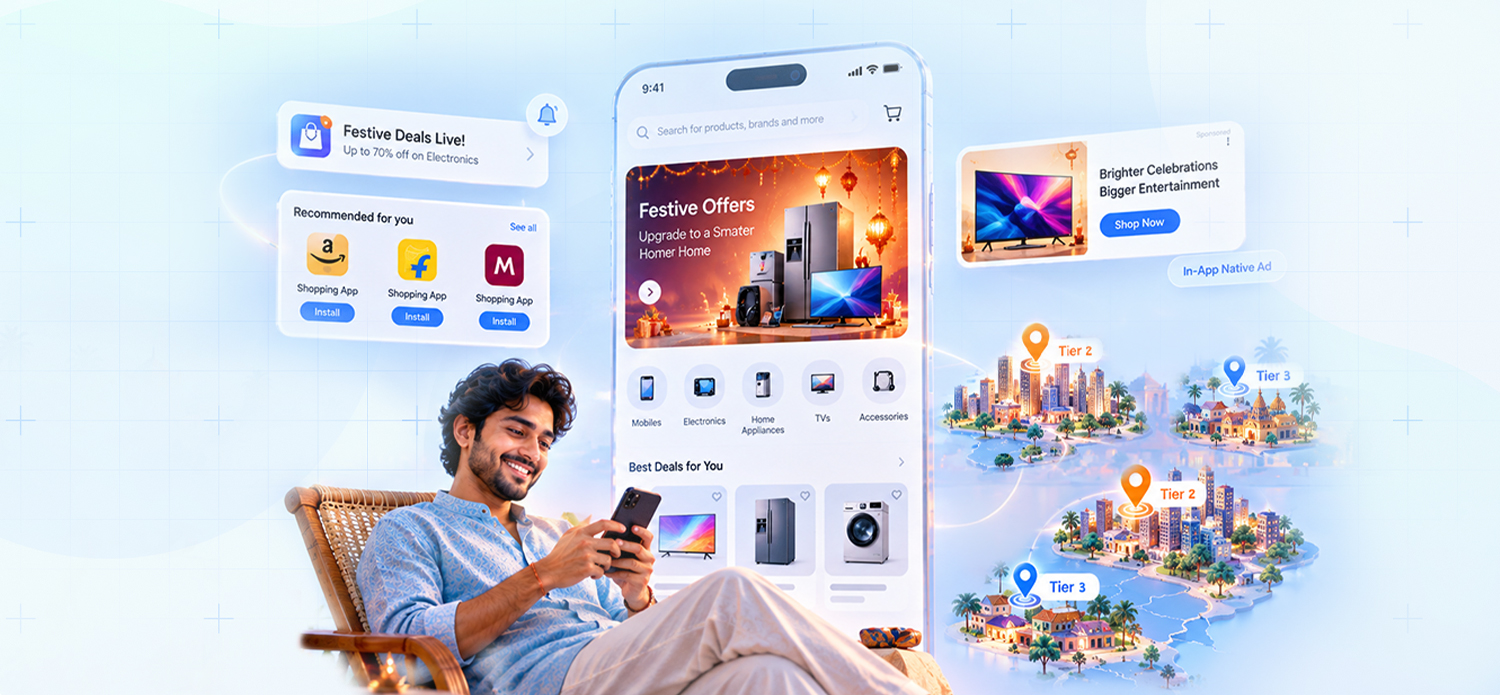
Tier 2 and Tier 3 cities contributed 66% of incremental D2C order volumes in FY26. Another report forecasts festive online retail to reach $15-16 billion, with Tier 2 markets emerging as an important growth driver across categories such as fashion, beauty and personal care. For app marketers, the opportunity isn’t simply to identify smaller cities. It is to understand which audiences within those markets are most likely to install, engage and convert. Instead of treating all non-metro users as one audience, campaigns can be informed by:
- Category and product affinity
- Content and browsing behavior
- Device and mobile environment
- Previous app engagement
- Purchase behavior and intent
- Value versus premium preferences

Source* Fynd, Unicommerce, GrabOn, TheFederal
This makes Tier 2 and Tier 3 growth more than a geographic story. It is also a story about changing consumer behavior and expanding digital demand.
Reach users across more mobile environments
As more consumers enter the festive shopping journey, mobile reach becomes increasingly important. But reaching them does not have to rely on conventional performance inventory alone. Digital consumption is also expanding across screens and environments. For app marketers, this means the consumer journey can move across content, commerce, and mobile environments before conversion. Advertisers can combine environments based on their role in the acquisition journey:
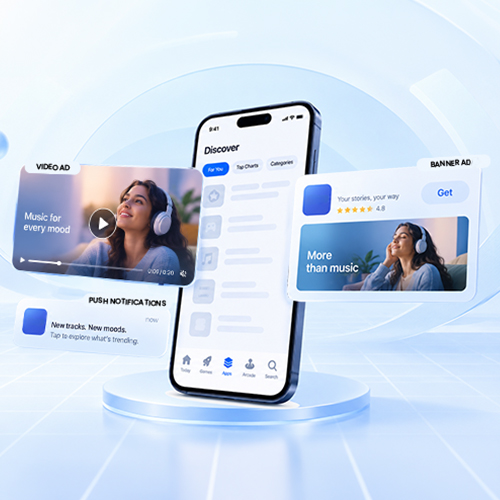
OEM inventory: Reach users through device-level environments and high-attention touchpoints, adding incremental discovery beyond conventional in-app inventory.
In-app inventory: Reach relevant audiences within app environments based on context, behavior, and campaign objectives.
Programmatic and performance inventory: Capture higher-intent users and optimize towards installs and downstream actions.
Start acquisition before peak sale days
Consumer shopping does not begin when the biggest sale goes live. Hansa Research found that 61% of consumers begin shopping at least a week before the festival, while 50% start two to four weeks in advance. This gives app marketers a valuable window to learn before purchase intent peaks.
Advertisers can use the early festive period to:
- Test creatives across audiences and markets
- Identify stronger-performing audience groups
- Build audiences from engaged users
- Retarget users as intent increases
- Shift budgets towards audiences delivering stronger outcomes
The early festive period can therefore work as a learning window, helping marketers understand which audiences, creatives, and messages are gaining traction before peak demand arrives.
Different apps need different acquisition goals
This shopping mix is also becoming more diverse, with categories such as grocery, beauty and personal care, home and furniture gaining momentum. Redseer expects online grocery to grow by 48-50% and beauty and personal care by 35-40% in 2026, showing how festive demand is expanding beyond traditional electronics-led shopping.
That means the same acquisition strategy will not work equally well for every app, and the KPI should therefore reflect the business outcome. For example, a commerce app may be optimized towards first purchase, a fintech app towards registration or transaction, and a gaming app towards quality engagement and retention.
This also means looking beyond CPI, as a lower CPI does not necessarily mean a more efficient campaign. Marketers should evaluate what users do after installing, including registration, product views, first purchase, repeat purchase, or other category-specific actions.
Turning festive reach into meaningful app growth
Festive 2026 will create more opportunities beyond India’s largest cities, but capturing them requires more than expanding geo-targeting. App marketers need to connect audience behavior, digital consumption patterns, omnichannel mobile reach, earlier engagement, and continuous optimization. The result is a more adaptive acquisition strategy, one that identifies where demand is emerging, understands how audiences are behaving, reaches users across relevant environments, evolves creative with the user journey, and measures success by what happens after the install.
Because the next phase of app growth isn’t simply about acquiring more users. It is about acquiring users who are more likely to create long-term value.
Written by Sanjeev Bankira, Country Head, Applabs