Valentine’s Day may be emotional, but buying behaviour is increasingly practical. Nearly half of season spending happens in the final days leading up to the holiday, with retailers reporting that up to 75 % of sales occur on February 13 and 14 alone. Searches spike, app usage increases, and mobile becomes the primary decision screen. For performance advertisers, this short window changes everything and here is what that new model looks like in practice.
Mobile Becomes the Decision Layer
In the last three days before Valentine’s Day, users aren’t browsing casually. They’re comparing prices, downloading apps, checking delivery timelines, and acting fast. With total Valentine’s-related queries surging from around 17.2 million in January to nearly 37.9 million in February, the 72 hour window sees more than a two-fold jump. This makes mobile advertising, especially in-app and app discovery placements the most effective way to capture intent at scale.
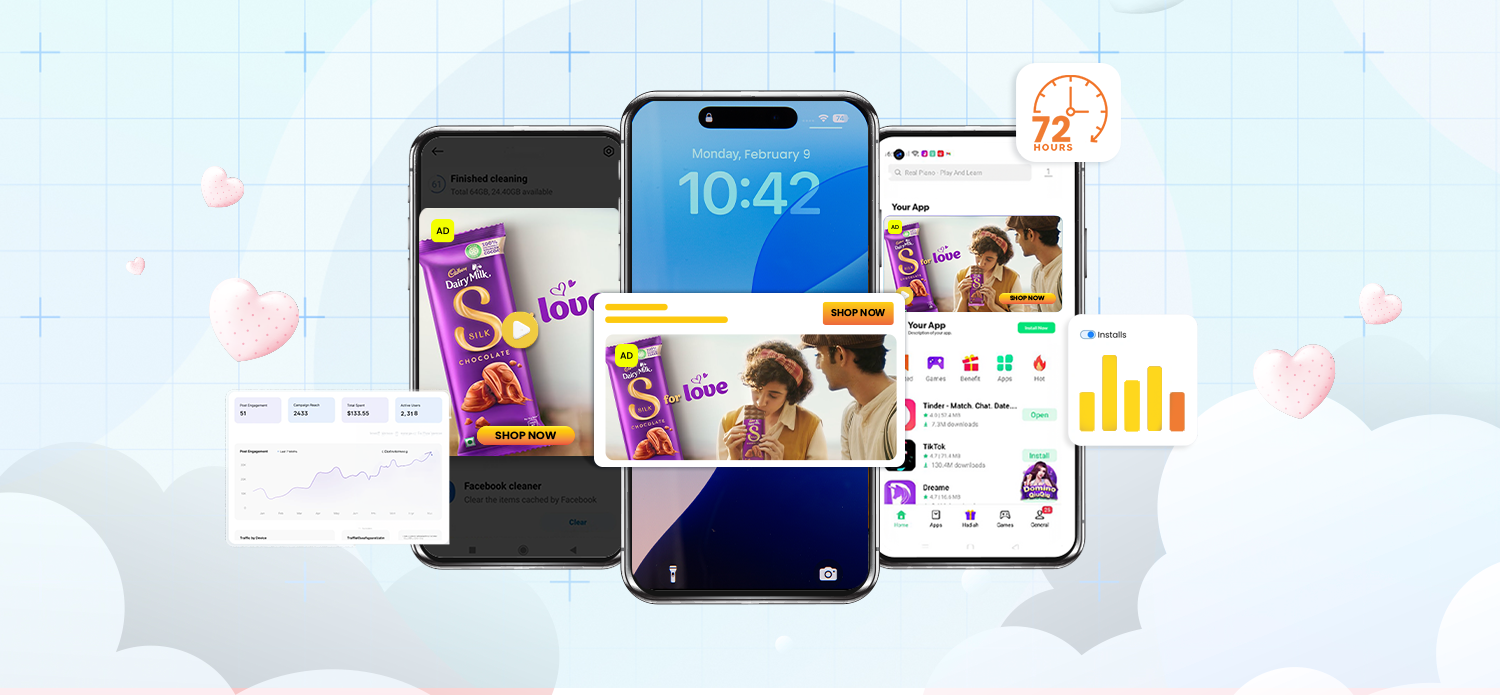
Adtech platforms like AppLabs are designed for this moment. By activating mobile-first inventory and In-app environments, brands can reach users when intent is highest. This requires predictive bidding models that can identify which segments are heating up and dynamically reweight spend toward those opportunities as they emerge.
Real-Time Optimization Instead of Pre-Set Budget Pacing
The 72-hour window leaves little room for manual optimisation as Valentine’s demand is inherently volatile and prone to unpredictable spikes. Performance depends on programmatic buying, real-time signals, and dynamic creative deployment toward SKUs, creatives, and cohorts that are converting in the present. A unified DSP allows advertisers to shift budgets, refresh creatives, and optimize placements without breaking momentum.
High-Intent Audience Modeling Over Broad Retargeting
Not all retargeting users are equal in the final window, even though most traditional setups still treat them as a single pool. The highest-value cohorts are those showing fresh buying signals, such as product page dwellers, cart viewers, price checkers, and delivery-timeline visitors, and blending them into generic retargeting segments dilutes return on ad spend at exactly the moment when efficiency matters most.
Merging Install and Retargeting Strategies into One Platform Layer
In Valentine’s crunch time, new users and returning users behave more similarly than many advertisers expect, because both groups show compressed decision cycles, both respond to urgency messaging, and both convert or bounce within minutes of first contact. Treating installs and retargeting as separate silos therefore creates budget inefficiency and inconsistent messaging, whereas operating them as a single, intent-driven performance layer allows brands to allocate spend based on conversion probability rather than user label.
If your Valentine strategy still looks like a pre-booked media plan locked in days ago, you are already late to the real performance window, because last-minute demand now rewards speed, precision, and real-time adaptability. What brands need instead is a mobile-first performance partner powered by a platform that can dynamically reprice bids, reallocate budgets, prioritize high-intent users, deep link to product-ready paths, and unify installs with retargeting into one outcome-driven layer.
Book a demo with Applabs.ai and build a Valentine advertising platform that actually matches how people buy today.
Written by Sanjeev Bankira, Country Head Applabs, India & MENA